Hidden Meanings in JJK Season 3 Opening: The Gustav Klimt & Edvard Munch References You Missed
MAPPA is playing mind games with art history. The Culling Game OP isn't just eye candy; it's a death omen written in gold leaf and oil paint.
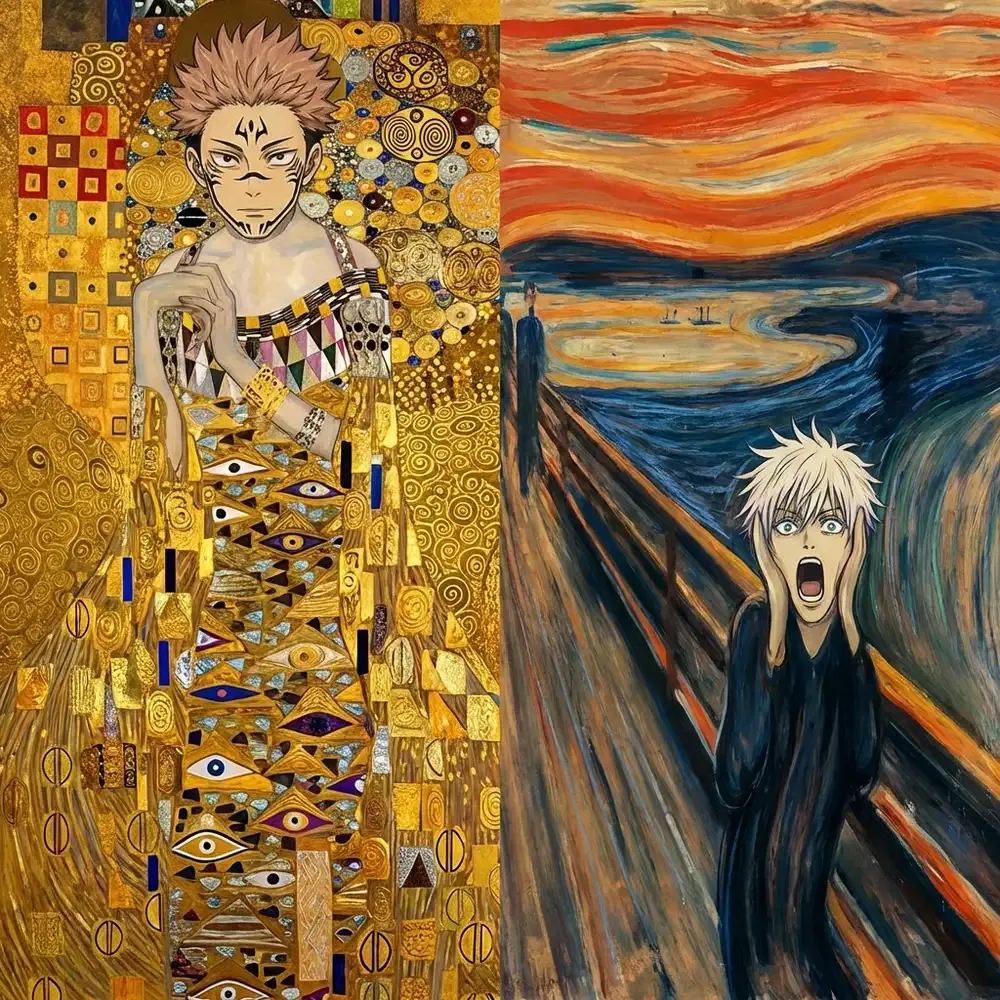
MAPPA isn't just showing off their budget anymore. They're showing off their culture.
If you felt the new Jujutsu Kaisen Season 3 (Culling Game Arc) opening was unsettlingly beautiful, that’s not an accident. The animators are actively referencing two titans of Western art history: Gustav Klimt and Edvard Munch.
Why does this matter? Because these paintings aren't just aesthetic filler—they are massive, screaming foreshadowing for the trauma about to hit our screens.
| Technical Specs | Detail |
|---|---|
| Director | Goshozono Sota (Cinema-style specialist) |
| Art Direction | Surrealist / Art Nouveau |
| Key References | Vienna Secession (Klimt), Expressionism (Munch) |
| Vibe Check | Midsommar meets Neon Genesis Evangelion |
1. Yuta & Rika: "The Kiss" (Gustav Klimt)
Pause frame 0:45. Look at Yuta Okkotsu holding the manifestation of Rika. Gold. Everywhere.
This is a direct homage to "The Kiss" by Gustav Klimt.
In the original masterpiece, a couple embraces on the edge of a cliff, wrapped in golden robes that bind them together. In Jujutsu Kaisen, this symbolizes Yuta and Rika's relationship perfectly. The gold isn't luxury; it's a gilded cage.
Klimt was famous for painting subjects trapped in beautiful prisons of ornamentation. This mimics the "Curse of Love" binding Rika to Yuta. It looks holy, but it's suffocating. MAPPA is telling us: Their love is eternal, but it’s a curse.
2. Megumi Fushiguro: "The Scream" (Edvard Munch)
If Yuta is the structured elegance of Klimt, Megumi is the chaotic breakdown of Munch.
The shot of Megumi standing alone against a blood-orange, wavy sky? That’s "The Scream".
Munch painted "The Scream" to depict "an infinite scream passing through nature." In the Culling Game, Megumi is at his absolute breaking point. He isn't physically screaming, but his psyche is fracturing.
The distorted sky isn't just a cool lens filter. It’s visual code for a mental breakdown. It’s the anime equivalent of an A24 horror movie shot—quiet, disturbing, and implying that something is terribly, terribly wrong inside his head.
3. Why High Art?
Why is a shonen anime referencing 19th-century European painters?
Because the Culling Game is Kenjaku's "Art of Violence." He views this death match as his masterpiece. By using classical art references, the anime elevates the brutality to something "sophisticated."
It creates cognitive dissonance. You are looking at something beautiful (Art History), but the context is a battle royale (Death). That uncomfortable feeling in your gut? That's intentional.
This opening is a walking art gallery.
Every frame has a purpose. If you love digging into these kinds of narrative layers, check out our breakdown of 5 Plot Details in the Culling Game that you might have missed while staring at the pretty colors.
JJK Season 3 isn't just about throwing hands. It's about the aesthetics of despair. And MAPPA just painted their masterpiece.
You might also like
The Psychology of 'Gloomyhara': How Tamon's B-Side Exposes Idol Industry's Dark Side
Behind the perfect smile is crippling anxiety. Tamon's B-Side is the rare anime that shows what happens when the mask slips. Now streaming on Crunchyroll.
Tamon's B-Side: Why K-Pop Stans Are Obsessing Over This Idol Anime
K-pop fans found their mirror in Utage Kinoshita. Here's why Tamon's B-Side is the must-watch shoujo for every stan in Winter 2026. Streaming on Crunchyroll.
Fire Force x Soul Eater: The Complete Ohkubo Universe Guide You NEED Before Part 2 Ends
Shinra became GOD and created Death. Here's everything connecting Fire Force to Soul Eater—with all the manga confirmations anime-only fans missed. Streaming on Crunchyroll.