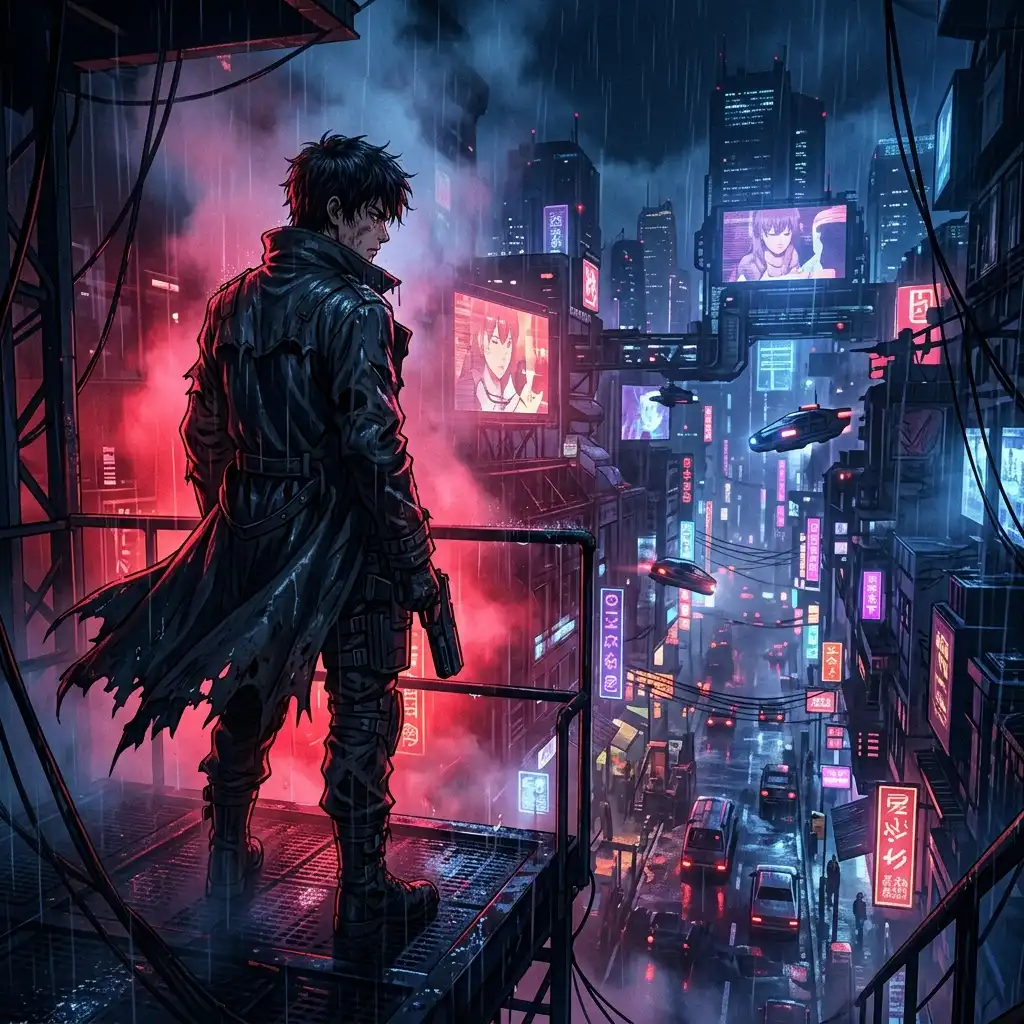
Why Stranger Than Heaven's Gritty 'Kokura' Trailer Proves Japanese Devs Are Done Playing Safe
Stranger Than Heaven drops its raw Act 1 'Kokura' trailer, setting a brutal tone ahead of its January 15 launch on PS5, Xbox Series, and PC.
Most anime-adjacent video game reveals follow an identical, sanitized playbook: slap twenty seconds of hollow fan-service cuts over an overcompressed J-Rock chorus, show an untextured open field, and pray pre-orders cover the day-one patch.
Stranger Than Heaven just burned that playbook to ash.
The freshly unveiled story trailer for Act 1, titled "Kokura," did not arrive to stroke player nostalgia or posture as another derivative high-school urban fantasy. Instead, it delivered an unapologetic gut punch of grounded noir storytelling, mid-century retrofuturism, and visceral character acting that puts modern mid-budget JRPG pipelines to absolute shame. Dropping hard confirmations for a January 15 release across PlayStation 5, Xbox Series X|S, and PC via Steam, the title is drawing an aggressive line in the sand: adapt or be forgotten.
| Technical Specs | Detail |
| Title | Stranger Than Heaven (Act 1: Kokura) |
| Developer / Studio | Studio Heavenbound / Production Syndicate |
| Format | Narrative Action RPG / Multi-Act Release |
| Release Date | January 15 |
| Platforms | PlayStation 5, Xbox Series X | S, PC (Steam) |
| Distribution | Worldwide Digital / Select Physical Editions |
The 'Kokura' Pivot: Why Industrial Bleakness Beats Cheap Neon
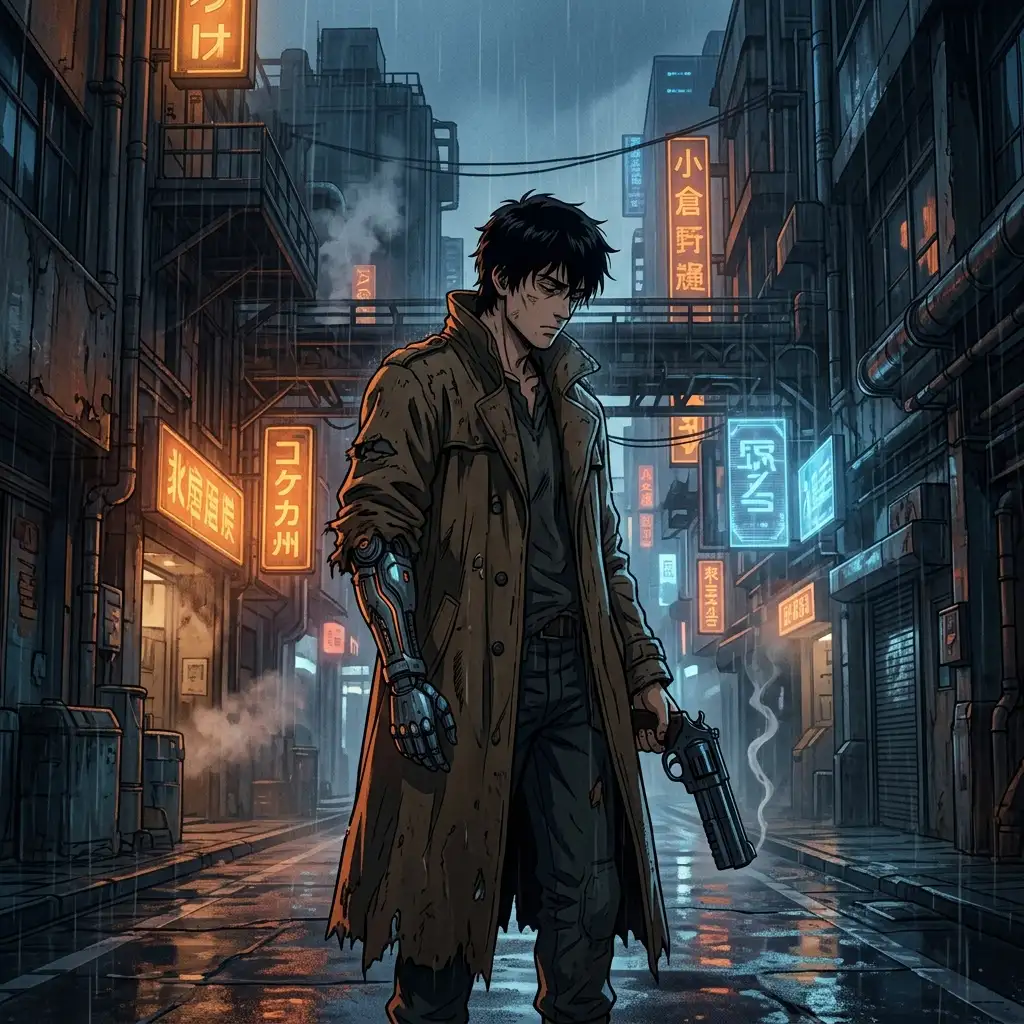
Setting Act 1 inside Kokura—a real-world historical industrial hub in Fukuoka known for heavy manufacturing and wartime weight—is an intentional narrative posture. While modern anime games obsess over hyper-stylized Shibuya crosswalks or bland high-fantasy plains, Stranger Than Heaven drops players straight into soot, grease, and rain-soaked steel mill alleys.
The trailer frames Kokura not as a playground, but as an oppressive machine chewing through its cast. Every environment shown exhibits an obsession with industrial decay: rusting gantry cranes, exposed low-voltage wiring, and brutalist apartment complexes that feel closer to Mamoru Oshii’s Patlabor 2 than anything Bandai Namco or Square Enix shipped this decade.
This aesthetic choice reflects an overdue correction. For five years, anime-style productions leaned on flat pastel lighting to mask weak asset fidelity. Stranger Than Heaven swings in the opposite direction. The lighting engine uses heavy shadow volumes, sodium-vapor street lamp diffusion, and localized volumetric steam to ground its anime art direction in tangible physical grime.
Direction and Sakuga Heritage: Who Is Pulling the Strings?
Look past the cinematic grading and the production pedigree reveals itself immediately. The key framing in the "Kokura" trailer does not rely on stiff, canned motion-capture presets. The combat sequences and close-quarters hand-to-hand skirmishes display clear hand-keyed micro-spacing and variable frame timing—hallmarks of veteran 2D key animators working directly inside 3D rigs.
Industry insiders have tracked key personnel shifts across Tokyo over the past eighteen months, noting veteran talent quietly exiting legacy studios to supervise action sequencing on this title. The influence is unmistakable: combat transitions use distinct impact freeze-frames, snapping camera pans, and kinetic squash-and-stretch physics that echo classic 90s OVA combat choreography.
Cinematography duties on this trailer clearly prioritized spatial coherence over chaotic visual noise. Where recent action RPGs mask poor hit detection behind blinding particle effects, Stranger Than Heaven pulls the camera back to showcase footwork, weapon weight distribution, and momentum recovery. When a blade connects or a round chambers, the impact registers through sound staging and physical recoil rather than screen-covering neon sparks.
Pacing, Multiplatform Parity, and the Multi-Act Gamble
Locking down a January 15 release date across PS5, Xbox Series X|S, and Steam simultaneously signals absolute confidence in the game's optimization pipeline—or a terrifying gamble with submission deadlines. Japanese productions historically struggle with multiplatform PC parity out of the gate. Frame-pacing stutters, broken ultrawide support, and abysmal keyboard-and-mouse mapping frequently plague day-one releases.
However, the technical presentation in the "Kokura" footage ran at a clean, locked 60 frames per second with visible sub-surface scattering and complex draw distances. By structuring the narrative into distinct Acts—starting with Kokura—the developers appear to have avoided the scope-creep disaster that derailed massive sandbox projects like Granblue Fantasy: Relink during its agonizing eight-year gestation.
Instead of promising an infinite, empty galaxy, Stranger Than Heaven confines its scope to dense, layered, mission-driven urban sectors. It is the exact production model that allowed classic narrative masters to flourish: tight budgets deployed on deep interactions rather than miles of vacant terrain.
The Digital Trenches: What Fandom Is Screaming About On X & Reddit
The community reaction across social platforms tore wide open within twenty minutes of the trailer's premiere. Discussion threads shifted from cautious curiosity to outright faction warfare regarding the game's tonal severity and multi-act structure.
"Finally an anime-aesthetic action game that doesn't look like an interactive mobile gacha ad. The weight on that parry animation in the Kokura alley segment gave me instant Cowboy Bebop meets Bloodborne chills." — @KuroSakuga_ on X
"Act 1 in January sounds great on paper, but I’ve been burned too many times by episodic releases. If Kokura ends on a cliffhanger and Act 2 is stuck in development hell for three years, this whole project dies on arrival." — u/SteelGeass on r/anime
"People hyping up the visuals need to look closer at the crowd NPCs in the background. Main characters look god-tier, but Kokura looks like a ghost town with five recycled extras walking around. Budget went straight into the boss fight and nowhere else." — MyAnimeList Community Discussion
The split in sentiment highlights a cynical, battle-hardened community. Fans are desperate for adult, narratively uncompromising anime games, but years of unfinished launches have conditioned them to hunt for technical red flags. While critics zero in on crowd density, the sakuga enthusiast camp is already breaking down individual combat frames frame-by-frame."If this doesn't run at 60fps on Steam Deck without turning the handheld into an improvised thermal bomb, we riot. But credit where it's due: that art direction is cooking." — @DeckOtaku on X
High Stakes at the Starting Line
January is traditionally where publishers dump games they hope the world forgets before spring blockbusters arrive. Launching Stranger Than Heaven dead center in mid-January is either institutional suicide or a calculated predatory strike against a barren release calendar.
If Act 1 "Kokura" delivers on the mechanical grit, razor-sharp art direction, and mature thematic weight displayed in this trailer, it will immediately embarrass the bloated, focus-tested mediocrity coming out of Japan's legacy giants. If it stumbles on PC performance or leaves players holding half a story, it will serve as another cautionary tale of ambition outstripping execution.
Come January 15, we find out whether Stranger Than Heaven is the revolution anime action games desperately need, or just another gorgeous trailer destined to rot in Steam backlogs.