Trigun Stargaze Review: The 'Broken Hero' Arc Redefines Vash the Stampede
The goofy pacifist is dead. In the wake of the Lost July incident, Vash is a man haunted by sins he didn't commit. Stargaze turns trauma into a masterpiece.
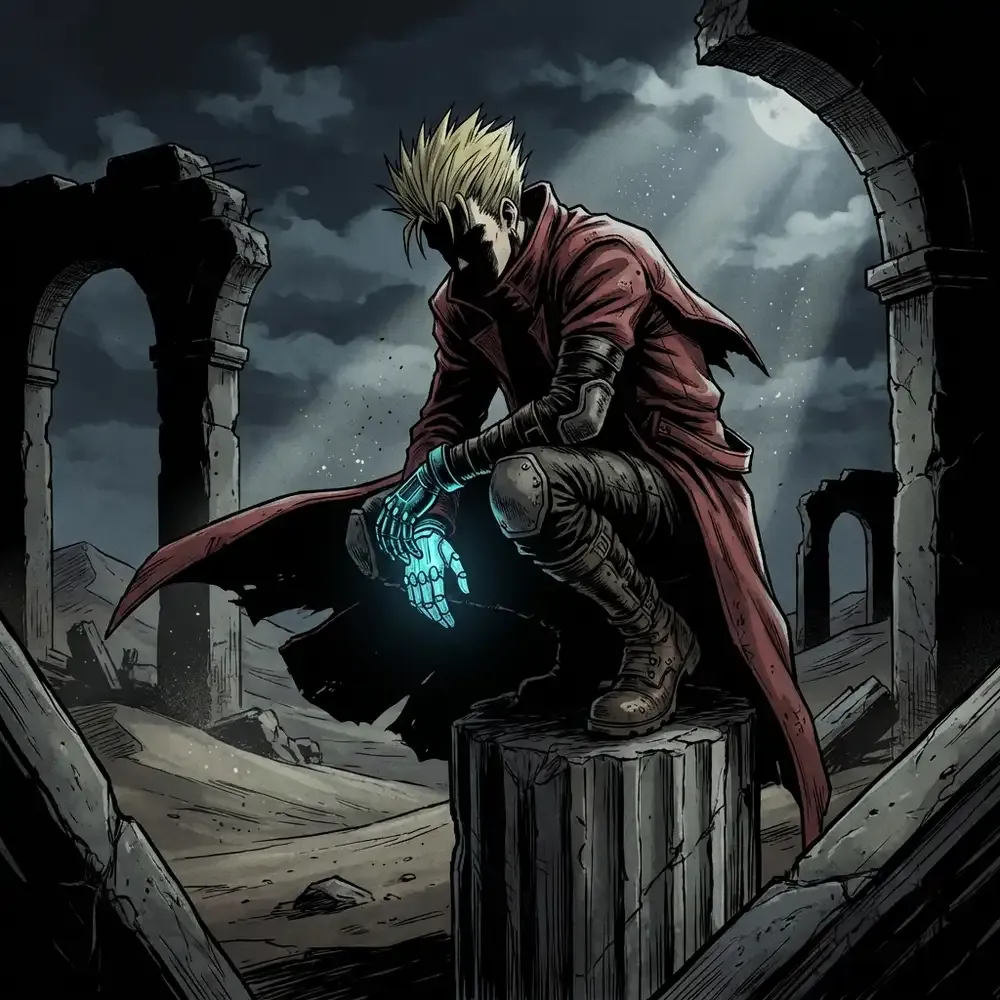
We all remember the Vash from the 90s. The lovable idiot. The guy who screamed "LOVE AND PEACE!" while dodging bullets. Even in the first half of Trigun Stampede, that mask was still intact. He smiled to hide the pain.
But in Trigun Stargaze (the Final Phase), the mask hasn't just cracked. It's shattered.
This isn't just a sequel; it's a deconstruction of the "pacifist hero" archetype. Vash the Stampede is no longer hiding. He is broken.
| Technical Specs | Detail |
|---|---|
| Studio | Orange |
| Director | Kenji Muto |
| Format | TV Series (Final Phase) |
| Streaming | Crunchyroll, Hulu |
Score: 9.0/10 (Masterpiece)
Pros: Best CG animation in the industry. Vash's psychological depth is terrifyingly real. The "Lost July" guilt adds stakes that feel heavy.
Cons: Prepare to be depressed. This is not a "fun" adventure anymore.
The Weight of "Lost July"
To understand this new Vash, you have to understand the scale of his trauma.
Two years ago, his brother Millions Knives forced Vash's Angel Arm to overload. In an instant, the city of July was erased. (For a full recap of this catastrophic event, read our Vash vs Knives Guide). Millions of lives—people Vash swore to protect—were vaporized by his own power.
It doesn't matter that it wasn't his fault. It doesn't matter that Knives pulled the trigger. To Vash, his existence was the gun.
This isn't something you bounce back from with a donut and a thumbs up. This is a character who is fundamentally hollowed out by guilt.
Running From Sins He Didn't Commit
The "Broken Hero" archetype is common in anime, but Vash's version is distinct because of his absolute pacifism.
Most broken heroes turn violent (see: Ereh Yeager, Kaneki Ken). They decide the world is cruel, so they must be cruel too.
Vash goes the opposite direction. He becomes more desperate to save people, not out of hope, but out of a terrifying need for atonement. He is trying to balance a ledger that is permanently in the red. Every life he saves is a drop of water in an ocean of blood.
A Darker, More Human Depth
Trigun Stampede was already darker than the original anime, but Stargaze is pushing into psychological horror territory. We are watching a man with severe PTSD trying to function as a savior.
When he smiles now, it looks painful. When he draws his gun, his hands don't shake from fear—they shake from the memory of what they're capable of.
This isn't "edgy" for the sake of being edgy. It is the logical conclusion of his character arc. You cannot be a pacifist in a world of violence without it eventually breaking your soul.
Vash isn't fighting to win anymore. He's fighting to die with fewer regrets.
The tragedy of Trigun isn't that Vash fails. It's that he succeeds, and it still costs him everything. As we head into the finale, don't expect the "Love and Peace" catchphrase to save the day.
Expect a broken man standing against a god, armed with nothing but a conviction that is slowly killing him.
You might also like

The Psychology of 'Gloomyhara': How Tamon's B-Side Exposes Idol Industry's Dark Side
Behind the perfect smile is crippling anxiety. Tamon's B-Side is the rare anime that shows what happens when the mask slips. Now streaming on Crunchyroll.

Tamon's B-Side: Why K-Pop Stans Are Obsessing Over This Idol Anime
K-pop fans found their mirror in Utage Kinoshita. Here's why Tamon's B-Side is the must-watch shoujo for every stan in Winter 2026. Streaming on Crunchyroll.
Fire Force x Soul Eater: The Complete Ohkubo Universe Guide You NEED Before Part 2 Ends
Shinra became GOD and created Death. Here's everything connecting Fire Force to Soul Eater—with all the manga confirmations anime-only fans missed. Streaming on Crunchyroll.