Why Kakashi Hatake's Masked Design Remains Shonen's Greatest Visual Hook
Kakashi Hatake's masked face remains one of anime's sharpest design choices. Analysis on visual restraint, merchandise longevity, and character tragedy.
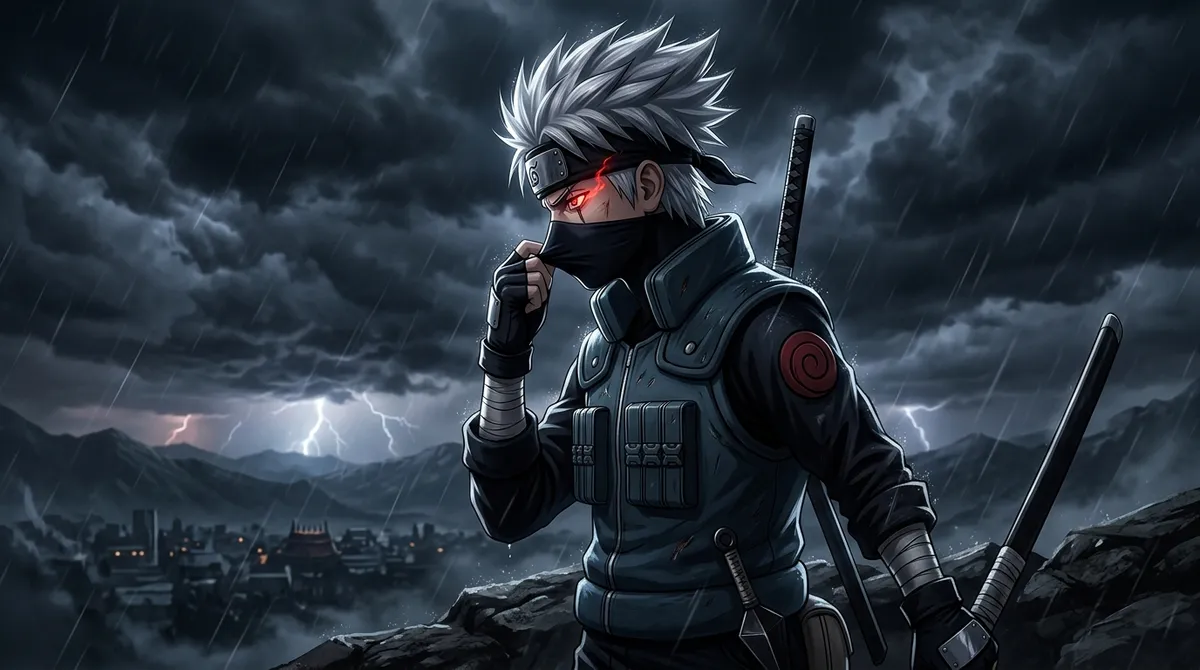
Why hide lead mentor's face for over fifteen years? Masashi Kishimoto made visual minimalism narrative weapon, turning single covered jawline into permanent engagement engine.
| Technical Specs | Detail |
|---|---|
| Original Creator | Masashi Kishimoto |
| Studio | Studio Pierrot |
| Format | TV Series / Manga |
| Streaming | N/A |
The Economy of Character Silhouette
Kakashi Hatake works on paper because design demands zero wasted ink. Forehead protector pulled askew over left eye. Lower face concealed by tight fabric. Silver hair cutting sharp diagonal silhouette. Step-by-step drawing breakdowns dominate digital tutorial spaces decades later because underlying geometry remains elementary: balance triangular hair volumes against rigid vertical necklines. Strip away complex armor and character identity still survives on three basic strokes.
Restraint fuels commercial longevity. From legacy Anbu-era collectibles to modern figures, sculptors lean on physical mask to create immediate depth without sculpting complex mouth geometry. Visual absence forces viewers to read emotion purely through single visible brow and eyelid angle.
Narrative Stakes Behind Hidden Identity
Mask serves narrative armor, not mere aesthetic quirk. Character histories in franchise highlight how grief shapes ninja identity. Father's suicide, loss of Obito Uchiha, and execution of Rin Nohara left Kakashi primed for moral collapse. Editorial retrospectives frequently note his past easily justified villain turn. Instead, emotional suppression became physical barrier. Unlike rogue path seen in Itachi Uchiha: The Architect of Naruto's Greatest Tragedy, Kakashi turned trauma inward, detailed extensively in Kakashi Hatake: The Shinobi Defined by Ghosts.
Fan discourse constantly attempts to rationalize concealment—ranging from joke episodes about hidden lips to speculative medical theories. Kishimoto understood fundamental rule modern character designers routinely forget: mystery generates far more conversation than full reveal ever satisfies.
True mastery in character design lies in what artist refuses to draw.
You might also like
Why Anime Expeditions Crow Build Breaks Meta (And What It Means For Itachi Fans)
Eurogamer drops Crow build guide for Anime Expeditions. Breakdown shows why Itachi archetype dominates combat meta.
Why Naruto's Uchiha Clan Lore Runs Deeper Than Surface Shonen Rivalry
Deconstructing the mythological roots behind the Uchiha clan's curse of hatred, from Shinto deities to Vedic concepts.
Why Naruto's Uzumaki Clan Massacre Exposes the Shinobi World's Darkest Hypocrisy
The Uzumaki clan possessed sealing jutsu so lethal whole nations allied to erase them. Here is how their destruction shaped Naruto's world.